Showing posts with label green architecture. Show all posts

Top 10 green buildings by American Institute

The American Institute of Architects (AIA) and its Committee on the Environment (COTE) have selected the top 10 sustainable architecture and green design solutions.


The top 10 includes:

- City of Watsonville Water Resources Center by WRNS Studio. The new 16,000 square foot building consolidates three different city and county water departments and includes administrative offices, a water quality lab, educational space and a design that puts the story of water in California on display. The building, its systems and its landscape will serve to educate the public through exhibition and guided tours.
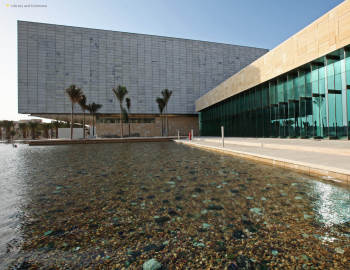
King Abdullah University of Science & Technology


- KAUST, Thuwal, Kingdom of Saudi Arabia by HOK. KAUST's new campus is the Kingdom of Saudi Arabia's first LEED certified project and the world's largest LEED Platinum project.


Kroon Hall


- Kroon Hall by Hopkins Architects and Centerbrook Architects & Planners. Replacing a brownfield site, Kroon Hall was charged with being a net zero energy building. The project has a mix of active and passive design measures and visible, invisible and interactive building features.

- Manassas Park Elementary School + Pre-K by VMDO Architects. The school is conceived throughout as a teaching tool that shepherds children along a path of environmental stewardship. Interior extended learning spaces offer views of the neighboring mixed oak forest, while elementary classrooms face shady moss and fern-covered learning courtyards featuring 'fallen' trees.

- Manitoba Hydro Place by Kuwabara Payne McKenna Blumberg Architects and Smith Carter Architects and Engineers. The project was designed utilising a formal integrated design process to achieve goals of energy efficiency, healthy workplace environment, urban revitalisation, sustainability and architectural excellence. At 88 kwh per sqm annually, from a demand side, it is the most energy efficient large office tower in North America, with a 66 per cent improvement over the standard.


355 11th Street


- 355 11th Street by Aidlin Darling Design. The project is a LEED-NC Gold adaptive reuse of an historic (and previously derelict) turn-of the-century industrial building. The design team implemented a strategy of introducing subtle perforations into new zinc cladding to allow light and air into the occupied spaces.

- Michael J. Homer Science & Student Life Center by Leddy Maytum Stacy Architects. The design encourages scientific inquiry, linking the school’s science curriculum to building functions throughout the seasons – how it breathes, resists gravity, conserves precious resources and generates energy.

- Omega Center for Sustainable Living by BNIM Architects. The Center has been designed to clean water, return the clean water to the local systems and educate users about the process. Eco-Machine technologies were selected to clean the water, utilising natural systems including the earth, plants and sunlight. The entire building and water process utilise site harvested renewable energy achieving a net zero energy system.

- Special No. 9 House by KieranTimberlake. The project was designed to provide storm-resistant, affordable and ustainable housing options for the residents of New Orleans’ Lower Ninth Ward displaced by Hurricane Katrina. Key goals were to create safe, healthy and dignified housing to residents in a flood-prone area and to empower residents to return to improved living conditions that take advantage of New Orleans’ climate.

- Twelve|West by Zimmer Gunsul Frasca Architects LLP. Twelve|West was designed to achieve the highest levels of urban sustainability and is expected to earn a platinum rating under LEED NC overall and LEED CI for the office floors. An emphasis was put on selecting low-impact materials, including salvage, reclaimed and FSC-certified wood. Much of the concrete building structure is exposed on the interior minimising the use of finish material and providing ample thermal mass.

Australia sees its first zero emissions house opened

Working with industry partners Delfin-Lend Lease and the Henley Property Group and supported by the AusZEH consortium, CSIRO designed and built the demonstration house 30 kilometres north of Melbourne’s CBD in the community of Laurimar in Doreen, Victoria.

The 8 star energy-efficiency rated AusZEH showcases off-the-shelf building and renewable energy-generation technologies and new future-ready energy management systems.

The AusZEH is designed to produce enough ‘zero-emission’ electricity from 6 kW solar panels to supply all the operating energy needs of the household so that its net total CO2 or other greenhouse gas emissions is zero.

The director of CSIRO’s Energy Transformed Flagship, Dr Alex Wonhas, says the uptake of zero-emission housing in Australia could have a significant impact on reducing emissions nationwide.

"CSIRO scientists estimate that if all the new housing built in Australia between 2011 and 2020 were zero-emission houses, 63 million tons of greenhouse gas (GHG) emissions would be saved," he says.

"This would be equivalent to taking all of Australia’s private cars off the road for two years and 237 days, or closing all Australia’s power stations for up to 100 days."

CSIRO’s Energy Transformed Flagship initiated the AusZEH project to demonstrate and evaluate how low-carbon housing can be achieved in Australia to reduce GHG emissions and create a more sustainable future for the nation.

For 12 months, the AusZEH demonstration house will become a home for an Australian family and a laboratory for CSIRO.


The house has been fitted with a unique energy management system developed by La Trobe University in partnership with CSIRO, which tracks energy use in the house and provides feedback via customised reports to household members.

This information on the performance of the ‘living’ house will be used to identify ways to improve the design of future zero and low-emission houses.

CSIRO initiated the National Research Flagships to provide science-based solutions in response to Australia’s major research challenges and opportunities.

Green Architect Projects Gaining Ground

Have you heard of green architecture, but are unsure exactly what it is? Green architecture concentrates on lowering the environmental damage done to the earth by putting up new buildings. This approach to putting up buildings while making it environmentally safe has been around for almost 30 years.

While green architecture was once viewed as highly unconventional, it's getting a lot more acceptable and popular. Many of the regulatory agencies are learning to recognize the advantages of the methods of green construction.

Today's green revolution can probably be tracked back to 1960s social awareness and the adoption of different methods of design. Green construction has made great strides since then. New techniques have been developed, new, innovative concepts and materials invented, and buildings have gotten greener.

A successful green project will reduce waste, use non-toxic materials, and pay close attention to the location and function of the building, as well as the climate that surrounds it. That's a far cry from "one size fits all" building methods of the past.

What makes a building green? There are a number of concepts that make up a green building. The main ones are energy efficiency, use of land, reduction of waste, materials used and the sustainability of the project. Green projects should use energy efficient electrical systems whenever possible, especially in the areas of heating and cooling. Gray water recycling, passive solar design, and the use of renewable power are all elements of this.

Building should be constructed to match the environment, rather than forcing changes to the site. Buildings should be located and oriented to take maximum advantages of their surroundings. Improved energy efficiency is the desired outcome and it makes for a building more pleasant to use. Use of land planning in the form of parking and transportation concerns become viable, too.

In a perfect setting the materials used should allow the building to be reused for other construction possibilities in the future producing minimal waste. Green architecture should reduce the dependence on wasteful and toxic materials and products, which is becoming much easier as the industry grows. Some buildings even reuse parts of other buildings, or waste materials such as old shipping containers.

Of course, not all projects labeled green are really green. Some are "greenwashed" - ordinary projects given a green veneer for respectability purposes. Others are built with good intentions but poor planning. That's why it's highly important and effective to know that all green projects be inspected carefully to ensure they are as safe for the environment as claimed. Helping the environment is complex, but it's worth it in the long run, with buildings being more usable and more sustainable years down the line.

Architecture Design of Luxury Private Nurai Residence in Dubai

If you living or traveling to Abu Dhabi at Northeast of Abu Dhabi city constructed new luxury private residence called Nurai. Here we would like to see architecture side of this luxury house. below is further information tell about Nurai luxury house.


The 130,000-square-meter island is about to be transformed into an achingly glamorous and luxurious resort and exclusive private residential estate, comprised of one boutique luxury hotel resort with 60 suites, 31 beachfront estates and 36 water villas.


The mammoth project is a collaboration between New York based Studio Dror, led by Dror Benshetrit, that has designed the residences, and the Paris-based firm AW2 are responsible for the design of the hotel.


The sheer scale of the project is awe-inspiring. The incredible multi-storey water villas alone will span 515 square meters each, and comprise three bedrooms, four bathrooms, a private rooftop garden with spa pool, private infinity pool, multiple decks, outdoor barbeque area, gourmet kitchen and concealed service quarters.


As for the private Seaside residences (which are sure to be snapped up by Saudi Princes and oil sheiks because they will probably be the only ones who can afford them), the five-bedroom, six bathroom estates span between 3,000 and 6,050 square meters.


Each Seaside estate will include a private beach and garden, rooftop garden with spa pool, infinity swimming pool, indoor reflecting pools, concealed service quarters, entertainment patios, outdoor dining areas, chef and show kitchens, and outdoor showers.


The resort is due to open in 2010 and the prices for the residences start at €20 million.

BUILDING GREEN HOSPITALS CHECKLIST

1. Choose an Environmentally Friendly Site

· Avoid farmland, wetlands, flood plains, environmentally sensitive lands, and hazardous substance sites.

· Rehabilitate vacant areas as necessary.

· Share existing parking/transportation infrastructure.

· Minimize heat island (thermal gradient differences between developed and undeveloped areas).

· Take advantage of existing transit, water, and energy infrastructure in the community.

· Preserve local habitat, greenfields, and natural resources.

2. Design for Sustainability and Efficiency

Building

· Prioritize parks, greenways, and bikeways throughout the new hospital area. Plan sufficient shade.

· Investigate incentives available from the U.S. Department of Energy.

· Consider (re)use of existing buildings, including structure, shell, etc.

· Identify opportunities to incorporate recycled materials into the building, such as beams and posts, flooring, paneling, bricks, doors, frames, cabinetry, furniture, trim, etc.

· Provide suitable means of securing bicycles with convenient change/shower facilities for those who cycle to work.

· Design for durability-life cycle costing/value engineering strategy for finishes and systems to reduce waste.

· Maximize day lighting and view opportunities (building orientation, exterior/interior shading devices, high-performance glazing, photo-integrated light sensors, shallow floor plates, increased building perimeter, etc.).

· Designate an area for recyclable collection and storage that is appropriate and convenient with consideration given to using cardboard balers, aluminum can crushers, recycling chutes, and other waste management technologies to enhance recycling program.

· Consider the installation of an on-site compost vessel.

· Design for adaptability of building design as user needs change.

· Establish a project goal for locally sourced materials and identify materials and material suppliers that can help achieve this goal; this reduces environmental impact due to transportation and supports the local economy.

· Provide capacity for indoor air quality monitoring to sustain long-term occupant health and comfort (carbon dioxide sensors integrated into building automation system).

Energy

· Orient building to take advantage of solar energy for heating and day lighting, and to encourage natural ventilation and passive cooling.

· Consider heat recovery systems where appropriate.

· Use computer-simulation model to assist in maximizing energy performance.

· Install mechanical ventilation equipment.

· Install high-efficiency heating and cooling equipment. Install a lighting control system.

· Install high-efficiency lights, appliances, and fixtures with motion/occupancy sensors where appropriate.

· Consider heating/cooling and energy from renewable sources (e.g., solar, wind, biomass, geothermal, bio-gas, etc.).

· Minimize light pollution by proper and judicious illumination.

· Design the building with equipment to measure water and energy performance.

· Consider task lighting "opening window" technology, and under floor HVAC systems with individual diffusers.

Futuristic architecture goes beyond green building

Architect David Fisher has taken the charming notion of revolving floor penthouse restaurants and turned it into something much, much bigger: a skyscraper in which every floor revolves, resulting in the first building which constantly changes its architectural shape.

The first two such skyscrapers are planned for Dubai and Moscow. The Dubai building already has 1000 reservation requests.

The building isn't just compelling because it looks really cool, either: it is an environmentally revolutionary concept.

The Dynamic Tower, the world’s first building in motion, takes the concept of green buildings to the next level: the Dynamic Tower will generate electricity for itself as well as other buildings nearby, making it the first skyscraper designed to be self-powered.

The building generates electricity from wind turbines mounted horizontally between each floor. For example, an 80-story building will have up to 79 wind turbines, making it a true green power plant. While traditional vertical wind turbines have some environmental negative impact, including obstruction of views and the need for roads to build and maintain them, The Dynamic Tower’s wind turbines are practically invisible. The Dynamic Tower turbines are also extremely quiet due to their special shape and the carbon fiber material they are constructed from.

Another environmentally green element of the Dynamic Tower is the photovoltaic cells that will be placed on the roof of each rotating floor to produce solar energy. At any time of the day, approximately 20 percent of each roof will be exposed to the sun, so a building that has 80 floors will equal the roofing area of 10 similar sized buildings.

In addition, natural, recyclable materials including stone, marble, glass and wood will be used for the interior finishing. To further improve the energy efficiency of the Dynamic Tower, insulated glass and structural insulating panels will be employed.


Article courtesy : Michele Lerner

Green Design and Earth-Friendly Architecture

Green Design is a term used to describe economical, energy-saving, environmental friendly, sustainable development. These resources explore the relationship between architecture and ecology, and show how you can use concepts of green design in your own home.

Green building-
Green building is the practice of increasing the efficiency with which buildings use resources — energy, water, and materials — while reducing building impacts on human health and the environment, through better sitting, design, construction, operation, maintenance, and removal — the complete building life cycle.

A similar concept is natural building, which is usually on a smaller scale and tends to focus on the use of natural materials that are available locally. Other commonly used terms include sustainable design and green architecture.

Green building materials-
Building materials typically considered to be 'green' include rapidly renewable plant materials like bamboo and straw, lumber from forests certified to be sustainably managed, dimension stone, recycled stone, recycled metal, and other products that are non-toxic, reusable, renewable, and/or recyclable (e.g. Trass, Linoleum, sheep wool, panels made from paper flakes, baked earth, rammed earth, clay, vermiculite, flax linen, sisal, seagrass, cork, expanded clay grains, coconut, wood fiber plates, calcium sand stone. Building materials should be extracted and manufactured locally to the building site to minimize the energy embedded in their transportation.

Can Green buildings save India from going grey?

A layman is very likely to show little interest in a speech or a discussion on green buildings. But, when the same person learns that there are only eight years left for us to save Mother Earth from the throes of emissions induced destruction, sitting up and taking notice is the only way out.
  • What is a green building and what are the key requisites for constructing a green building?

A green building is the one that makes the greatest possible use of natural light and air and least possible utilization of energy and water. It uses industrial byproducts, emphasizes on recycling of waste water, harvesting of rain water, least use of air-conditioning, less production of carbon dioxide and tries to safeguard the environment in every possible way. Making a building green begins at the planning stage. The aim has to be kept in mind throughout. Secondly, safety is paramount in case of a green building. If a labourer dies while the construction is on, the building is never given a green certification.

After the construction is over, it is not possible to make a building green. There are various requisites for planning and constructing a green building.

Firstly, identifying a site for the construction of the building is very crucial. Ideally the site should be located in a centralized place so that the inhabitants can use public transport and less or no fossil fuel run vehicles.

Energy utilization should be optimum in a green building. Care should be taken to reduce the load of air conditioning on the power system.

Water discharge should be zero in a green building. Good green architecture reduces wastage of water in a big way. A green building should ideally have all waste water biologically treated and recycled. Ample structural specifications are incorporated in green buildings for harvesting rainwater. Grey water (water left after washing utensils and clothes) can be used for gardening and flushing purposes.

Maximum effort should be made in use of recycled materials in the construction of the building. Effort should be made to use fly ash Ready Mixed Concrete (20% fly ash + 100% cement) in construction. Aerated concrete blocks can be used instead of bricks for better insulation and heat rejection. Roof insulation should be done with clay rather than chemicals. Maximum bamboo products should be used for flooring.

  • What is THE primary consideration while making a green building?

Though the term ‘green building’ says that it is about taking care of the environment, the comfort and considerations of the occupant is paramount. There is a standard to determine how good the Indoor Air Quality is, Carbon Dioxide content inside the building should be 400ppm over the ambient CO2 level.

Green buildings have the option of fresh air on demand. Coupled with effective and efficient cooling mechanism, green buildings can let occupants have a wonderful experience.